Memes—those often humorous images, videos or phrases that spread rapidly online, evolving as users add their spin—have proven to be a quick and easy way for brands to grab attention. But memes aren’t just a bandwagon to hop on; they’re an opportunity to reflect your brand’s unique identity, build community and even show some heart.
Here’s a guide to doing it right, with tips on avoiding the pitfalls of meme fatigue, sidestepping cultural faux pas and finding the right tone for your brand.
-
More than just trends
It’s easy to grab the latest trending meme and slap your logo on it. But the best meme strategies go a bit deeper than that. Memes are a chance to share your brand’s personality, not only “what’s hot this week.” When done thoughtfully, memes can be as unique as a brand’s logo or tagline.
Think of brands like Duolingo, whose playful owl mascot and goofy language jokes capture their fun approach to learning. Or Netflix, which tailors its memes to reference its shows, leaning into its edgy, pop-culture-savvy persona. Instead of using memes to chase clicks, let them be a vehicle for your brand’s voice.
Tip: Experiment with creating custom memes that speak to your niche or incorporate insider references that your core audience will “get”. This approach fosters a sense of connection and authenticity, making your brand memorable.
Embedded video: https://www.linkedin.com/feed/update/urn:li:activity:7267081183442661377
Photo/video caption: The “We let the Gen Z intern write our marketing script” was a 2024 TikTok trend.
-
More isn’t always better
While memes are designed to be light-hearted and quick, overusing them can turn off your audience. Meme fatigue is real; no one wants to feel like they’re stuck in an endless stream of the same recycled jokes. If a brand relies too heavily on memes without fresh ideas, it risks looking out of touch or desperate for attention.
The key is balance. Use memes thoughtfully rather than as filler content, and pay attention to your audience’s reaction. If people stop engaging with your memes, it’s a hint to scale back or switch it up.
Tip: Consider meme-like content that breaks from traditional templates, like a funny Venn diagram, a relatable chart or even short, snappy tweets. These still bring meme qualities—relatable, shareable and witty—without feeling like overused templates.
-
Memes that connect without alienating
Memes can be powerful, but they can also backfire spectacularly if a brand isn’t cautious. Context and content matter greatly—some situations and storylines lend themselves well to memification, while others can spell disaster. Align memes with lighter, more playful content rather than serious issues like health crises.
Certain memes can be interpreted differently across cultures and may inadvertently perpetuate stereotypes. Brands don’t need to be hyper-cautious, but a little sensitivity goes a long way in building trust, staying relatable, and ensuring their humour doesn’t offend or alienate anyone in their audience.
A good example is Burger King UK’s tweet, “Women belong in the kitchen,” on International Women’s Day in 2021. The company intended to highlight the lack of female representation in culinary careers, but the tweet was widely criticised for its tone-deaf approach and came off as offensive to many.
Tip: Be aware of any hidden meanings or cultural contexts behind a meme format before using it. When in doubt, ask for diverse input from your team or focus group to avoid blind spots and brand kryptonite.
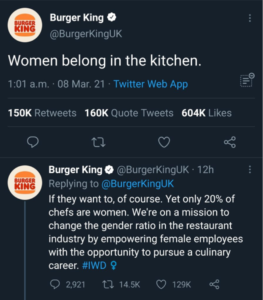
Photo captio: The 2021 Burger King tweet sparked controversy by stating, “Women belong in the kitchen,” without providing immediate context, which was later clarified in a follow-up tweet.
-
Start small and test the channels
Memes are often more positively received by specific audiences and on certain platforms. If you’re still getting the hang of meme marketing, it’s smart to start with channels like Instagram or TikTok, where the tone tends to be more playful and informal. These platforms provide a low-risk environment for experimenting with memes and gauging your audience’s reaction.
Once you’ve mastered the format and found your brand’s voice, you can gradually introduce memes on platforms like X (Twitter) or LinkedIn, where the expectations for content are a bit more professional. However, always remember to weigh the risk-reward balance carefully.
Tip: Don’t rush to post; test your memes first. Whether you’re on a light-hearted platform or a more serious one, always test your content with a variety of perspectives to ensure your humour lands just right and doesn’t miss the mark.
-
Embrace the low-fi
In a social media world where brands meticulously design every piece of content, memes offer a refreshing alternative: they don’t have to be polished. In fact, they’re better if they’re not! Audiences expect memes to be quick, simple, and sometimes even “ugly.” For brands that typically focus on carefully curated visuals, this might seem counterintuitive, but it’s a big part of what makes memes so effective.
Because memes are so easy to make, they’re great for quick reactions to current events, cultural moments, or even industry trends. Being timely and authentic is more important than being polished, so don’t overthink it—let your creativity flow and see where it goes.
Tip: Sit down with your team and brainstorm lots of memes at once. Pick the best ones and publish them without worrying about perfection. Sometimes, the messier, the better!
-
Set realistic expectations
The internet loves a good viral meme, but the truth is that very few memes reach that level of fame. Rather than setting out to make every meme “the next big thing,” aim to use memes as a way to connect consistently and authentically with your audience. A meme that resonates well within your niche is often more valuable than one that blows up on a massive scale.
For example, if your company targets accountants or lawyers, don’t be afraid to make memes specific to their world. Even if they don’t “break the internet,” these memes can foster a sense of camaraderie and inside humour among your audience, building loyalty and engagement over time.
Tip: If your meme performs decently within your community, consider it a success! Not every post needs a million shares to be effective.
-
Embrace the risks, roll with the punches
Finally, remember that putting memes out there does carry a bit of risk—some people might misunderstand, re-share, or remix your content in unexpected ways. But that’s part of the magic of meme culture! As long as your brand can embrace the occasional surprise, memes are a great way to join the cultural conversation.
Just keep in mind: if you’re worried about potential backlash or misinterpretation, it’s a good sign to pause and re-evaluate. But don’t let that fear hold you back from experimenting—after all, the risk is often what makes memes so fun and relatable in the first place.
Remember to stay genuine, avoid overuse and keep it simple. With a clear sense of your brand’s voice and a light-hearted approach, memes can be a powerful way to connect with audiences, build community, and show the world what makes your brand unique
So, get out there, have fun, and let the meme magic begin!
Written by Asa Butcher