“If you work in comms for any company that values diversity, equity, and inclusion (DEI), you must participate in Pride Month. The more visibility the month gets, the more it benefits LGBTQI+ activism over the coming year.”
This is a call to action from Anu Kantola, the vice president of the gender and sexual minority rights group Seta, a DEI consultant, and the chairperson of Rainbow Families Finland.
While creating a post shouldn’t be stressful, nobody wants to cause offence in the name of their employer. To provide information and guidance, Anu has agreed to answer some FAQs.
What should a comms team consider before posting about Pride in June?
Who is the intended recipient of this message? Is it top-down communication, or are we expressing acknowledgement and support? One common pitfall among many companies is claiming to understand these issues while needing more genuine expertise.
If you’re unfamiliar with a topic or even if you belong to a community, stay informed about the latest terminology and developments. For instance, in Finland, there’s currently significant discussion around the passing of legislation abolishing the requirement for trans people to endure invasive procedures before they can have their gender recognised. Before posting anything, ensure your knowledge is up to date by checking official sources (see list below).
Why is it important for companies to understand the origins of Pride Month in their communications?
I love that companies celebrate Pride Month, but it makes the communications more authentic if you note something about the origins of Pride. It commemorates the 1969 Stonewall riots in New York City. Sometimes, companies just see it as a celebration. They forget that this is an ongoing movement against hate and discrimination that has been going on since the 1970s.
What three common mistakes can be avoided when posting about Pride Month?
The first is to post about only one of the minority groups. For example, targeting only gays or lesbians or trans people – so not including everyone that belongs under the rainbow. Also, don’t mix up similar-sounding words like transsexuality and transvestites.
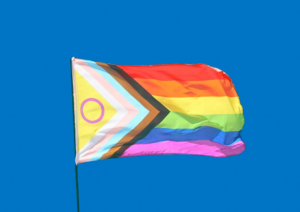
The Progress Pride Flag—photo by Sophie Popplewell.
Use the Progress Pride Flag (see above)—the circle is the newest addition and symbolises the inclusion of intersex individuals. Too often, only the six-band rainbow flag is used, yet the flag continues to evolve. The Progress Pride Flag holds significance as it encompasses intersectional marginalised groups, often referred to as “minorities within minorities,” who are particularly vulnerable to discrimination.
Make your language as inclusive as possible. If you don’t need to use gendered language, don’t use it. For example, you don’t say ‘ladies and gentlemen’ because it cuts out a lot of people. Always fact-check to avoid accidentally using offensive or harmful terms.
What should be considered before involving employees?
Be sensitive and ask if your employees wish to participate. You shouldn’t assume that everybody who belongs to a minority wants to be publicly open or visible. It’s not good to force a minority person from your company to be your mannequin, mascot, or free consultant. It’s better to use a professional. For many people, Pride Month is quite emotional.
If you find someone willing to come forward and discuss these topics, it’s beneficial to have representation that showcases the intersectional LGBTQI+ experience, such as different age groups and ethnicities. For instance, we have a board member who is 74 years old and represents an organisation called Rainbow Seniors.
Why can Pride Month be emotional?
Pride Month is when I usually receive the most hate posts and emails. It is supposed to be about celebration, but unfortunately, hate and microaggressions tend to rise during that month. I’m used to it, but I know a lot of people are afraid. It is common for some people working in big companies to get blamed for taking space or asked, ‘Why do we need to celebrate you during this month?’
How should a comms team react to a mistake in a post about Pride?
When it comes to crisis communication, it’s essential to listen. If someone points out an issue with a post, be open to correcting it. Depending on the severity of the mistake, you can either take the post down or make necessary edits. Always value feedback and be willing to learn from mistakes. Humility and a commitment to improvement are key.
Do you have any final words of wisdom to share with us?
Recognising Pride Month is an important step, but fostering an inclusive workplace should extend beyond a single month. It needs to be woven into the fabric of your company’s DEI culture. Understanding your organisation’s structure and demographics allows you to address these issues year-round proactively.
Written by Asa Butcher